
Developer Responds to Media Reports: Less Office Space, Landmark Public Park Remains

Portfolio

The developer of Budapest’s Láng District has responded to recent media reports in comments to Portfolio, clarifying details regarding the proportion of green space and the layout of the development. Project Director Zsanett Rózsahegyi confirmed that, in response to evolving market demand, the masterplan has been revised to increase the share of residential uses relative to office space. She also reaffirmed that the first phase remains on track for completion in 2028 and will feature more than 35% landscaped green space. Brownfield regeneration and the future of urban development will also be among the key topics at the upcoming Portfolio Property Investment Forum.

The first four buildings of Láng District—one of Budapest’s largest brownfield regeneration projects, located within the area bounded by Vizafogó Street, Váci Road, Esztergomi Road and Turbina Street—have now received their final building permits, allowing construction to progress according to schedule. As recently highlighted by Project Director Zsanett Rózsahegyi in an interview with Portfolio, and discussed further in the Portfolio Business Podcast, the development continues to move forward as planned.
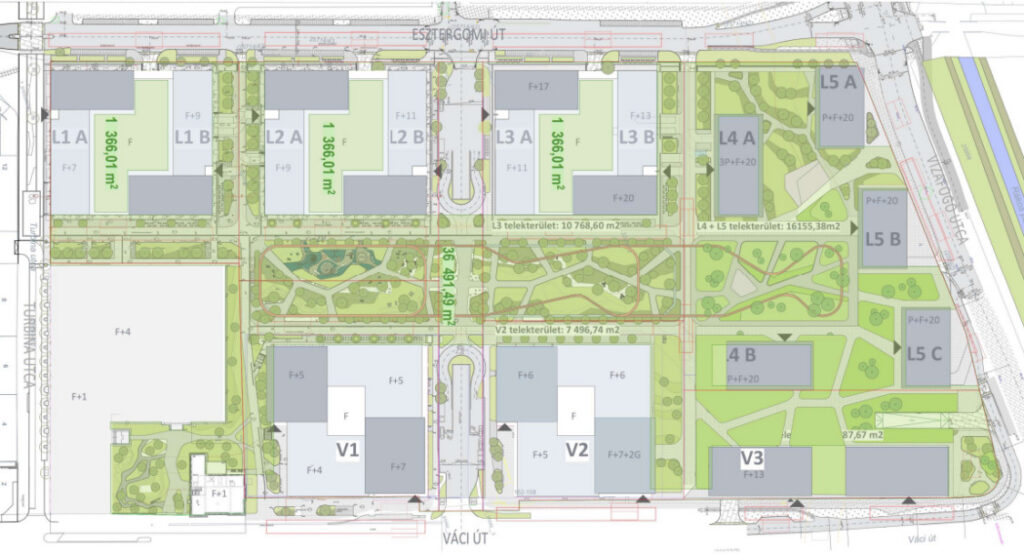
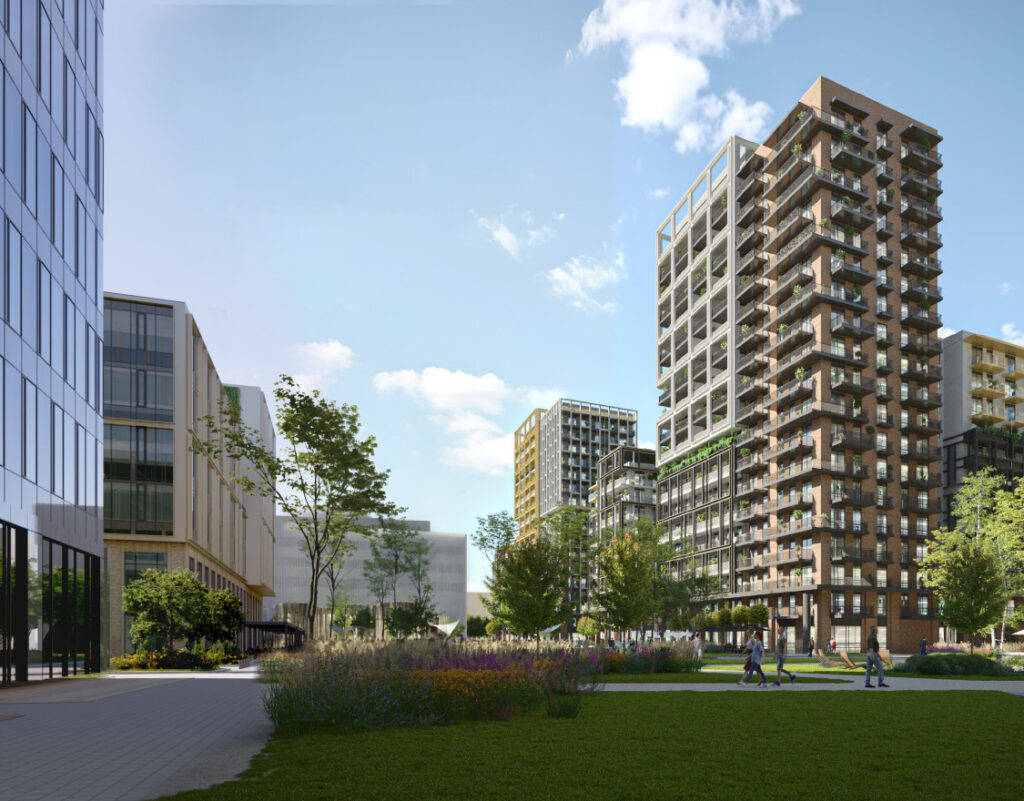
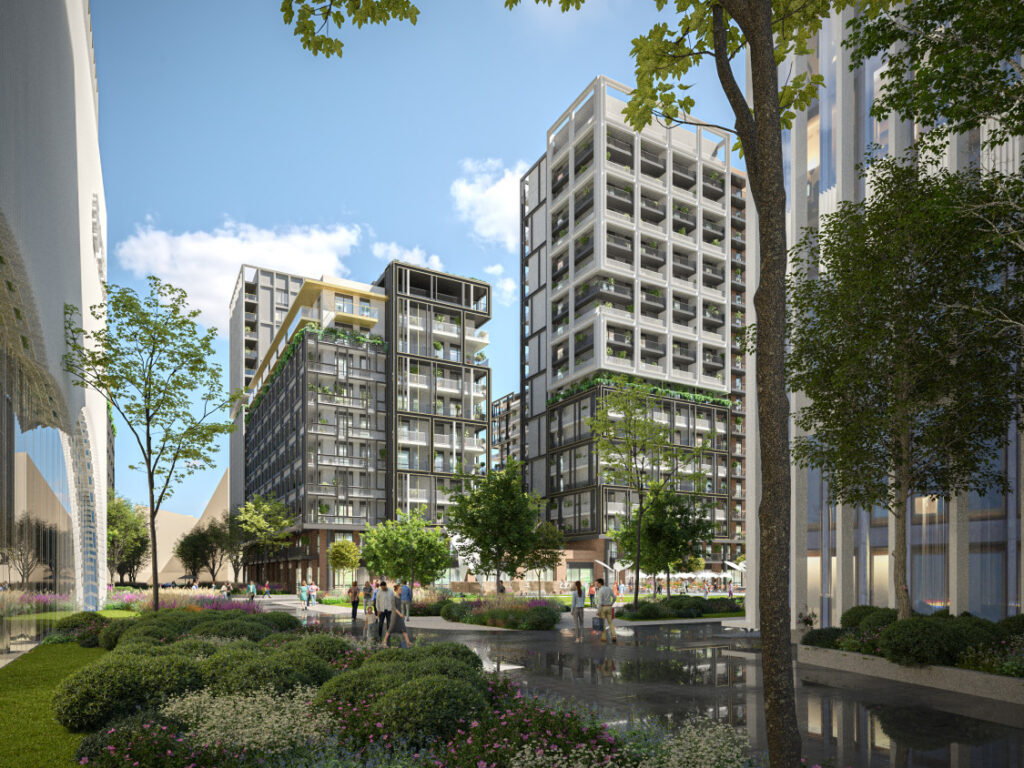
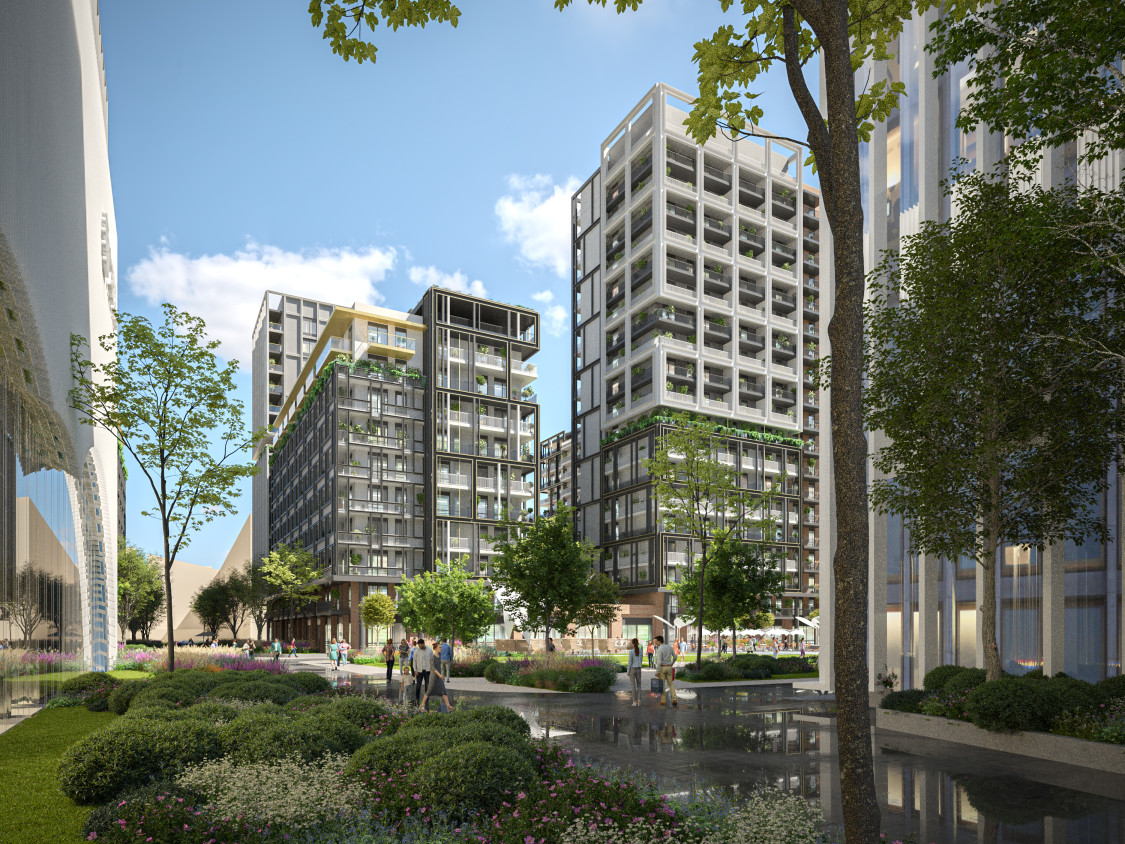
The green space includes both the central public park and the landscaped internal gardens, with rooftop gardens designed to complement—not replace—them.

Addressing questions about the project’s density, the Project Director emphasised that the distance between buildings will range from 25 to 40 metres—considerably more generous than the typical 15 to 20 metres found in Budapest’s inner districts. Building heights will also comply fully with current metropolitan planning regulations and will be proportionate to other major developments along the Váci Road office corridor.

Compared with the planning permissions approved in 2022, the development team has revised the balance of functions within the masterplan. As the office market has evolved in recent years while demand for high-quality new homes has remained consistently strong, the original 50:50 ratio has been updated.

The revised masterplan now allocates 67% of the development to residential use and 33% to office space.

According to Zsanett Rózsahegyi, these changes better reflect the needs of first-time buyers and families, while also receiving the support of both the District Architectural Review Board and the National Architectural Review Council.

More articles: